
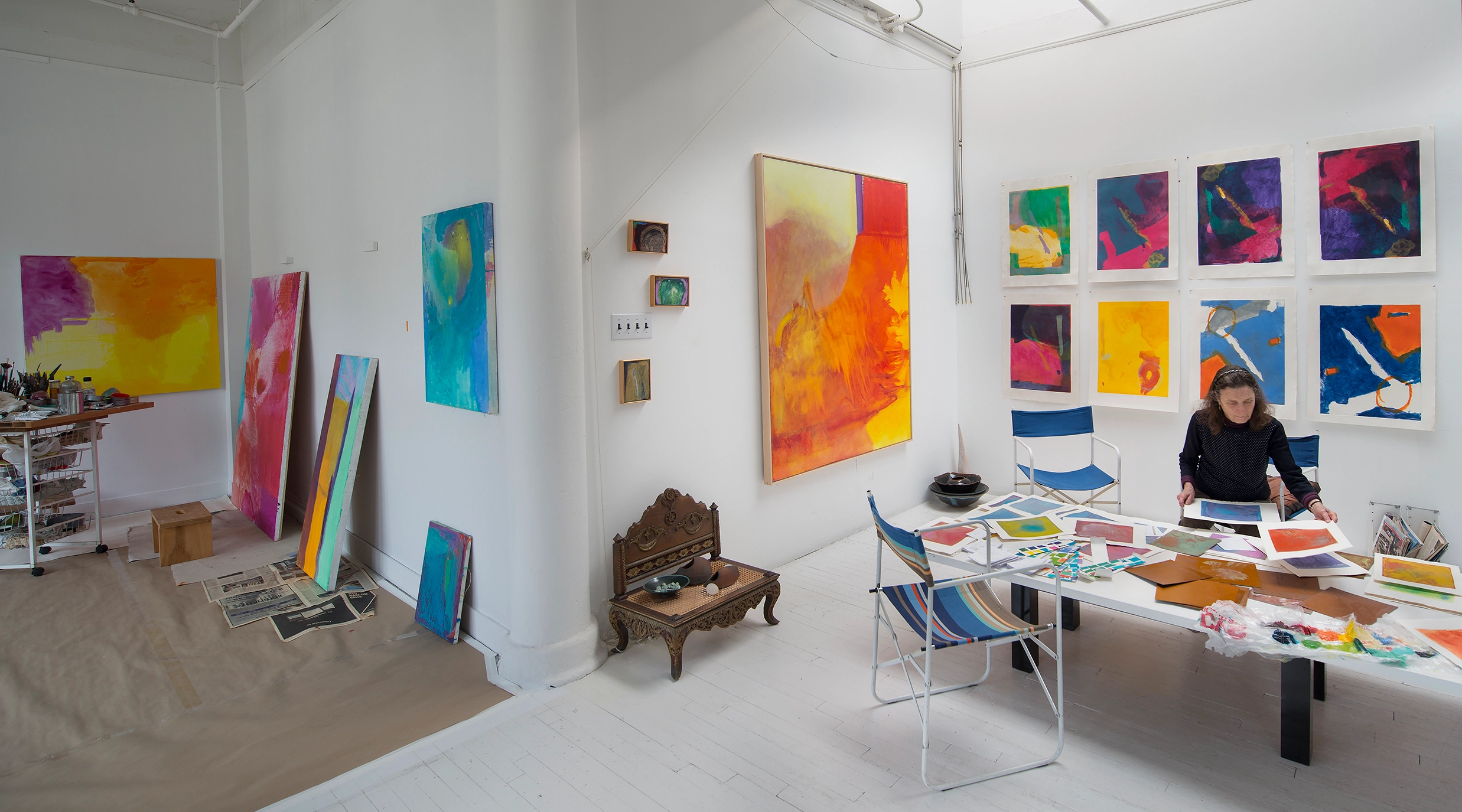
Printmaking served as another form of expression for Mason, one which supported her John Cage-inspired ethos of “getting the mind out of the way.” Working both with master printers and well-known workshops, printmaking served as an intuitive pathway for Mason to push gesture, color, layering, and chance.
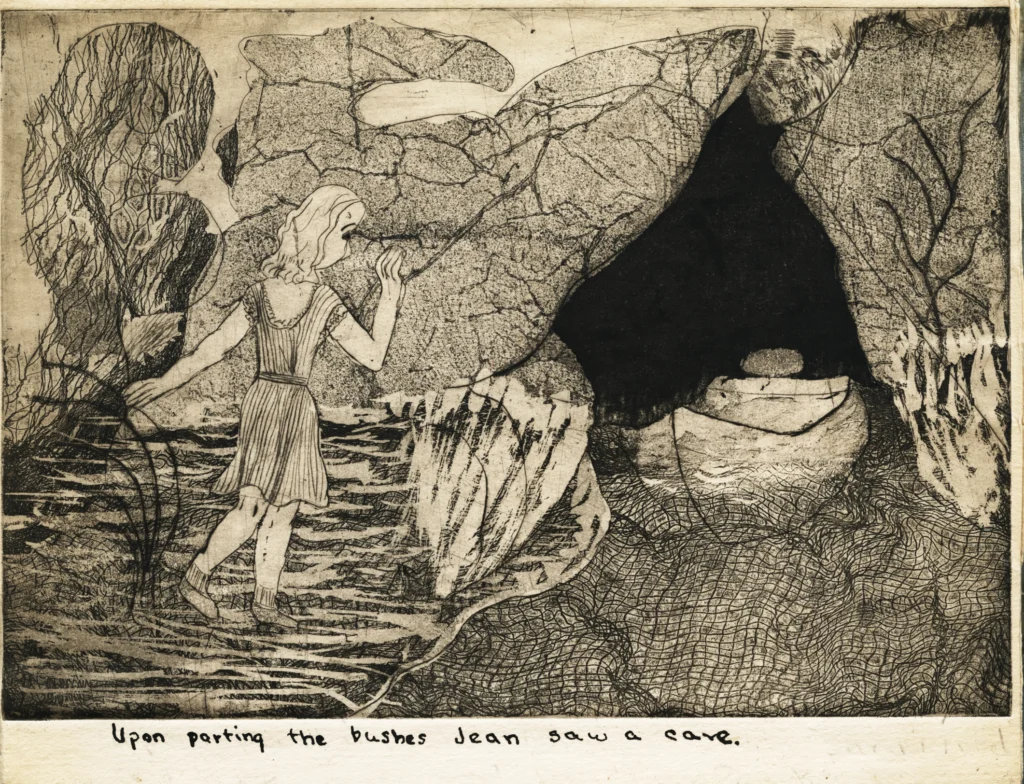
Mason was first introduced to printmaking via her mother Alice Trumbull Mason in the late 1940s, during her tenure at the renowned Atelier 17 print studio. The young Mason would often accompany her there as a teenager. Pictured below is Mason’s first print, created in 1946-47 at Atelier 17, to illustrate her story titled “Escape.”
In 1985, Emily Mason traveled with her husband, artist Wolf Kahn, to work at the renowned Tamarind Institute in Albuquerque, New Mexico. Tamarind had become well-known for their innovative approach to fine art lithography with invented methods for effectively representing painterly, spontaneity gestures in printing. Her early sessions at Tamarind were fruitful in exploring the limits of what was possible in printmaking.
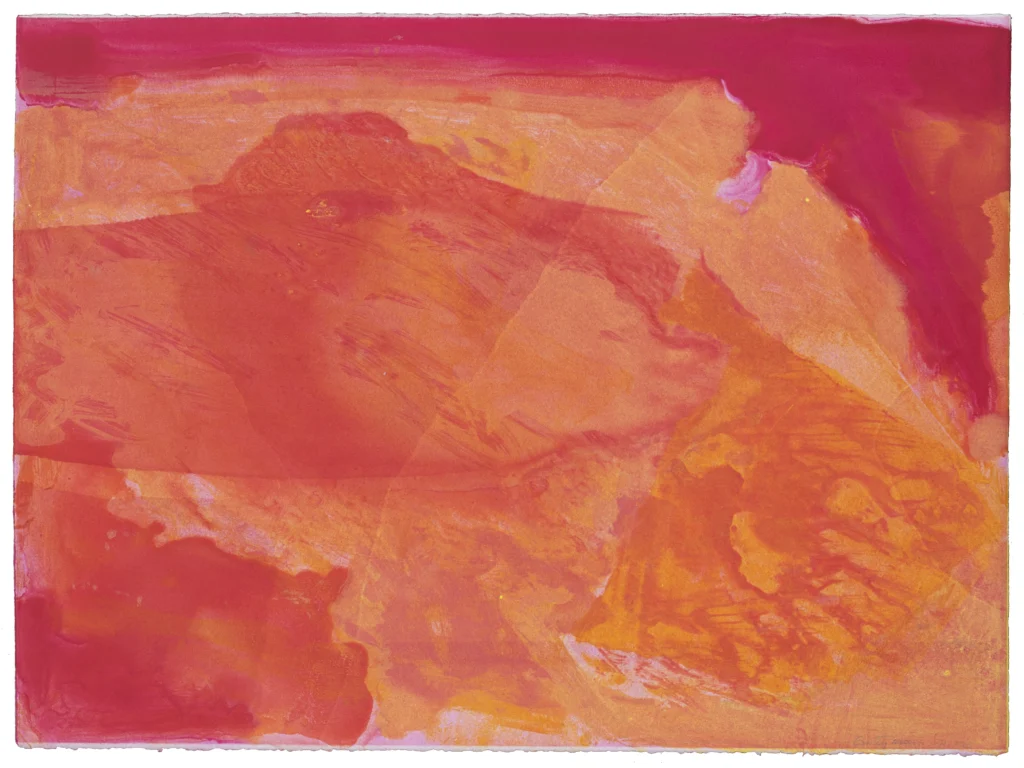
Shortly into her stay with Tamarind Institute, Mason wanted to move past edition printing, choosing to focus on creating monoprints, and eventually, monotypes. Monoprints provided unique variations, but, like the edition, they used a fixed matrix (an image is fixed or etched into a substrate such as a wood or plate). Monotypes, however, are completely individual unique prints with each impression, a process well-suited to the creative spontaneity and flexibility Mason desired.
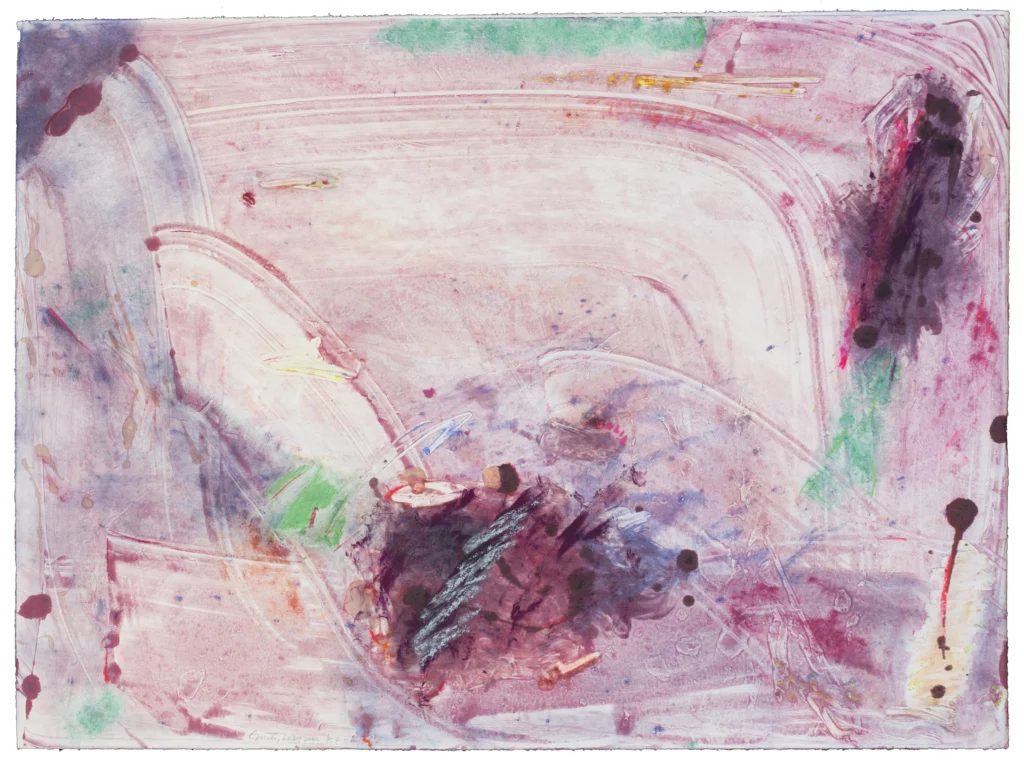
She continued her experimental printmaking at the Garner Tullis Workshop in Santa Barbara, CA, in 1987. Instead of passing a print through a traditional roller press, Mason concentrated on their flatbed press, wherein the image from the plate is impressed directly onto the paper. This allowed her to capture a range of marks and ink viscosities on plates, preserving the spontaneous, unplanned nature of her creative process.
In the early 1990s, she began working with printmaker Janis Stemmerman on carborundum prints. Mason would travel down to the print studio Stemmerman was renting on N11th St in Williamsburg once a week to print together. This was during the winter months, and Stemmerman fondly remembers the two would “eat lunch around the corner at a Polish restaurant, having borscht soup,” a warm reprieve from the bitter NY cold.
At this studio the Red Wing edition was printed; pictured here, the process from the working proofs to the final edition. Decades later, Mason signed and titled some of these proofs as unique works unto themselves. Stemmermann and Mason would continue to print together for almost three decades.
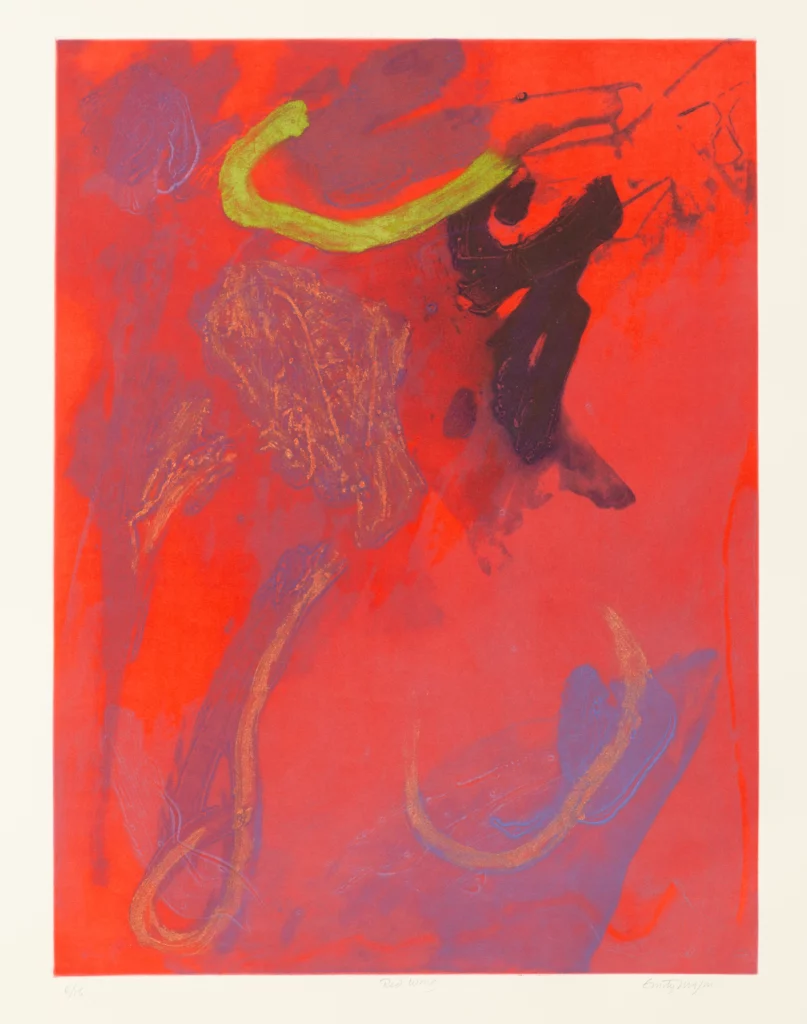
For the carborundum process, Mason would brush a matrix of glue and grit onto plexiglass plates. Through this method, Mason could experiment with layering, chance, and the various possibilities with different emerging images.
In 1989, Emily Mason began working with master printmaker Lisa Mackie. Through painting with acrylic on a plate covered with silk, Mason could experiment with layering and gesture. Mason and Mackie also created unique chine collé prints using handmade papers using a variety of colors and thicknesses. Oftentimes the paper would be employed as the main form or gesture, or at times would be printed over with a silk collagraph.
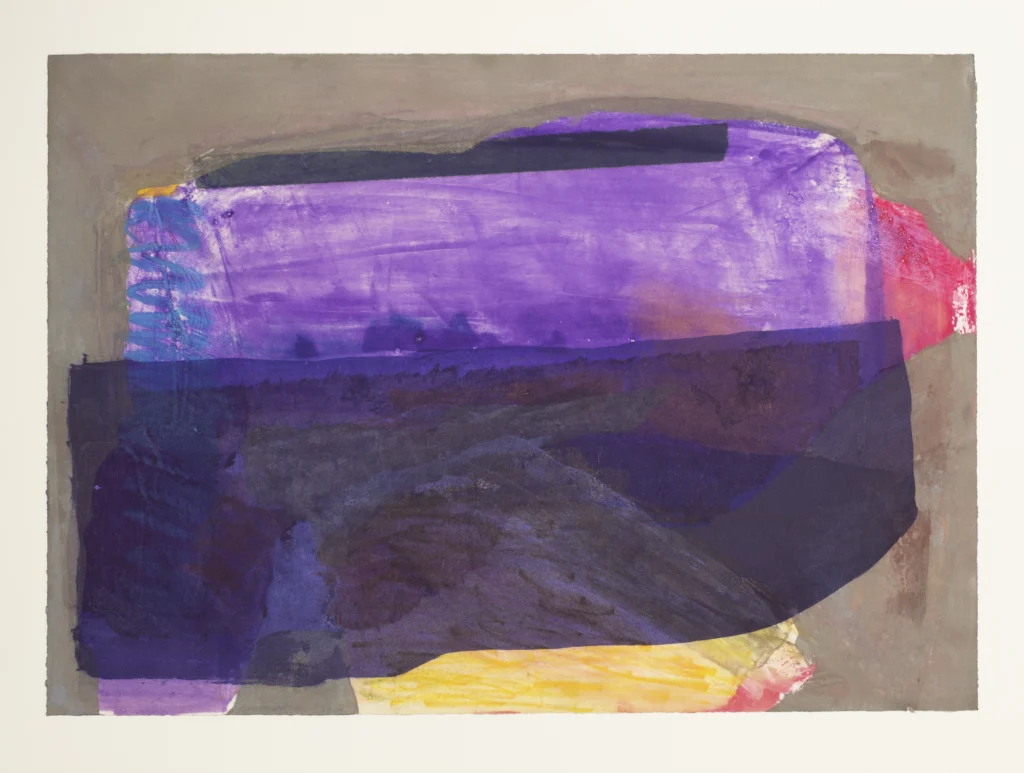
Mason also created a series of solarplate prints with Lisa Mackie. Solarplate printing involves exposing a plate with a light-sensitive polymer surface to UV light; an image (created on a transparent material, such as glass) is then etched onto the surface.

From November 2017–January 2018, Mitchell Giddings Fine Arts presented the exhibition Emily Mason: Explorations, which highlighted Mason’s monotypes, monoprints, and solarplates created between 1985-2016. In the artist talk for the exhibition, Mason described her feelings regarding the printmaking process:
“It’s sort of like if you bake a loaf of bread – you put it in the oven, and you just hope it’s going to rise and be good…printing is a wonderful, magical experience. I can’t urge you all enough to find a workshop or a place to do it.”