
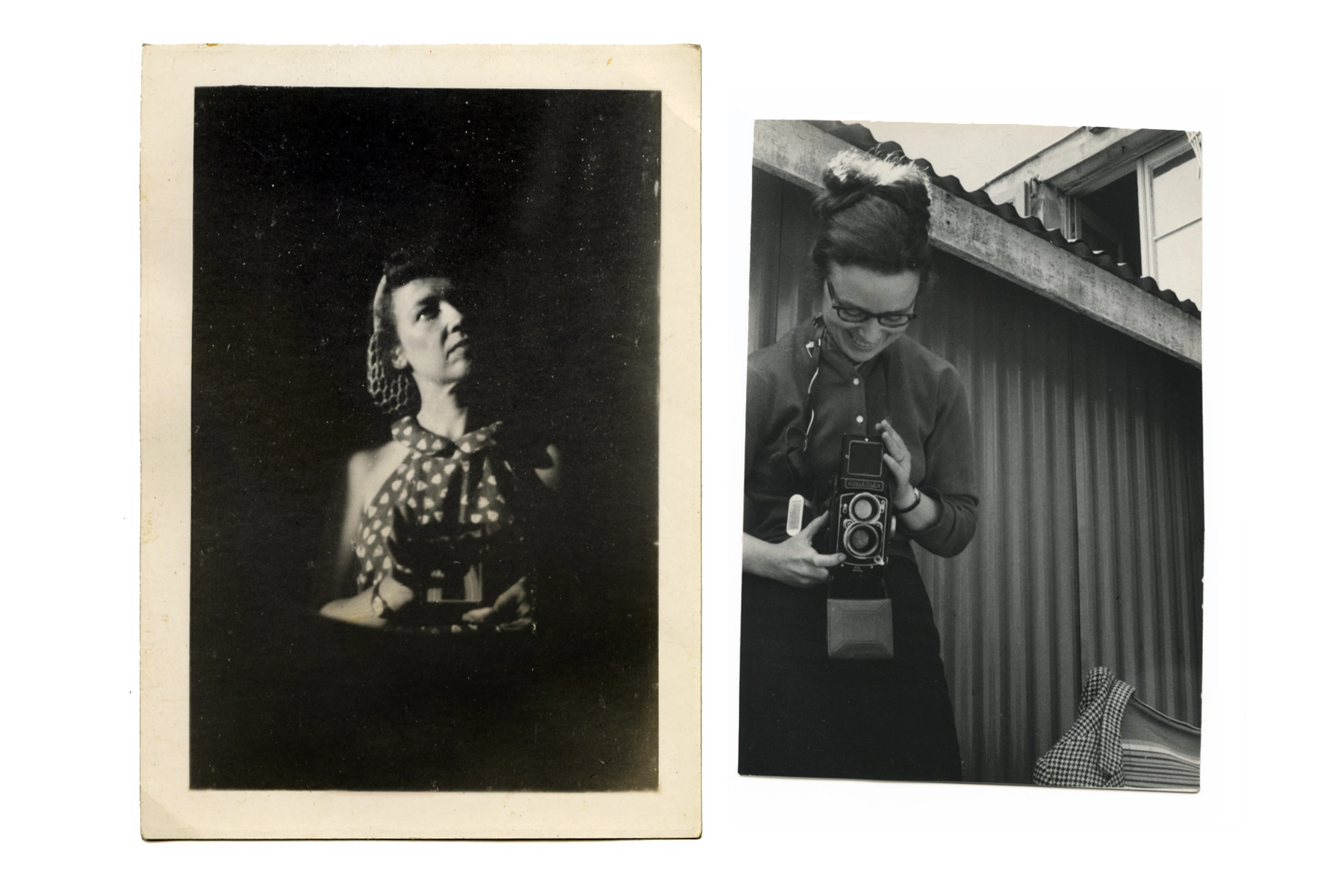
In celebration of Women’s History Month, we’re taking a look at a few moments in the lives of Emily Mason and Alice Trumbull Mason which exemplify their determination as women in the arts. While pursuing their own artistic paths, both artists also worked to uplift peers and students through advocacy, community involvement, and creative persistence.
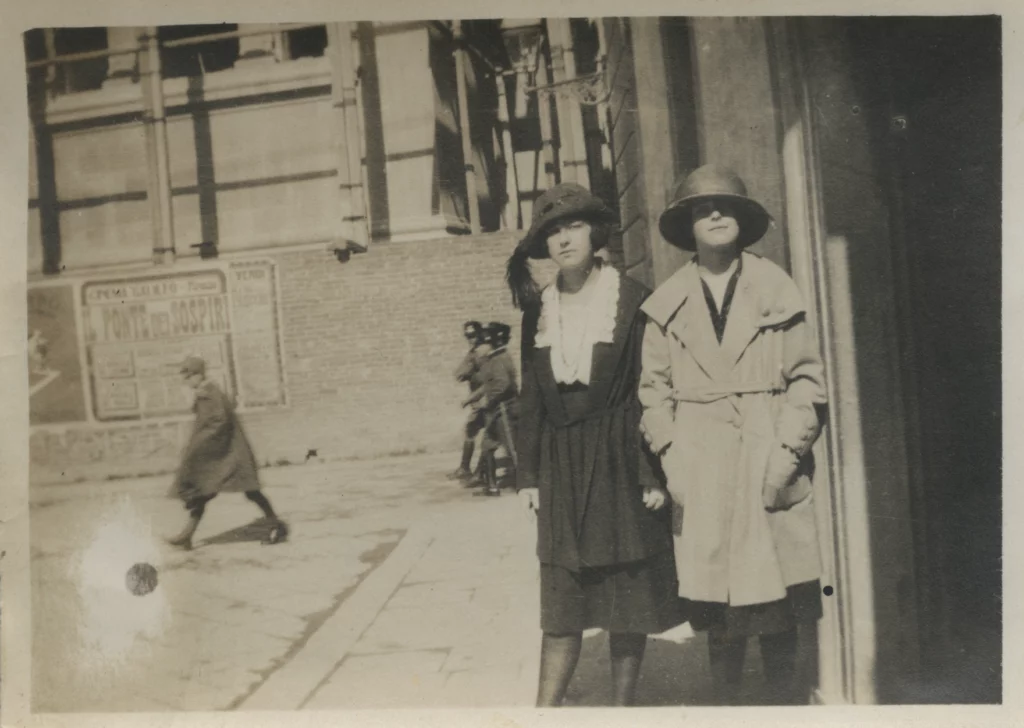
As Ilya Bolotowsky said, “Alice started too early.” Alice Trumbull Mason was a pioneer on many fronts; not only with abstraction, but through her unyielding drive to live the life she wanted. Determined, independent, and expressive from a young age, Mason chose a path which pushed against the gender norms of her time.
Seen as outliers in the art world, the American Abstract Artists were formed in 1936 to advocate for American abstraction and its visibility and inclusion in museums. Many women were involved in the forming and operations of the AAA; Alice Trumbull Mason was a founding member, as well as her friend, the artist Esphyr Slobodkina. In an interview with Ruth Gurin in 1969, Trumbull Mason recounted their protest at MoMA in 1940: “When we first began forming the American Abstract Artists we said, ‘what is the Museum of Modern Art anyway if it isn’t for abstract artists?’” And we picketed them!”
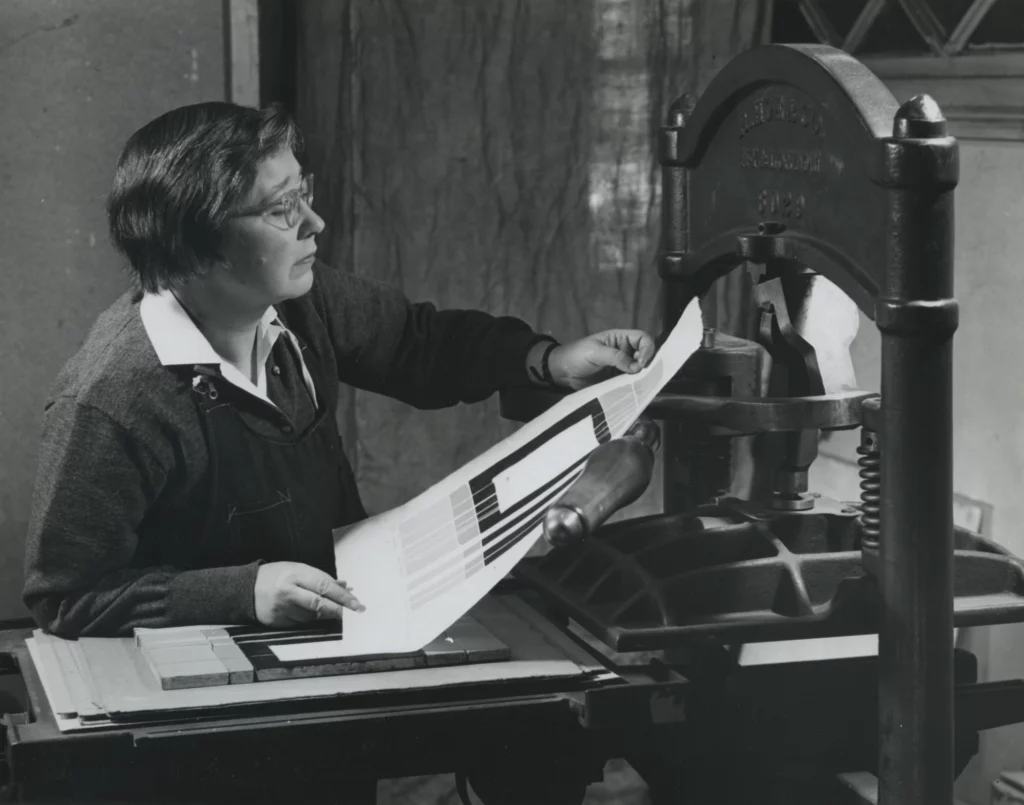
Trumbull Mason advocated passionately throughout her entire career for spaces which fostered artistic community, such as the AAA. This was also true of her involvement as a member of the Atelier 17 printmaking studio. Atelier 17 provided space in which artists could learn, experiment, and exchange ideas in printmaking; particularly, among women. As Christina Weyl notes in the 2019 online publication “The Women of Atelier 17: The Biographical Supplement”:
“…the experience of working at Atelier 17 also catalyzed a range of proto-feminist strategies and activity in the decades before women’s art movement of the 1970s. Even if these artists were not self-professed “feminists”—and few identified this way—the studio generated a wide spectrum of proto-feminist attitudes and practices, such as collaboration, network building, and collegial support of one another’s careers.”
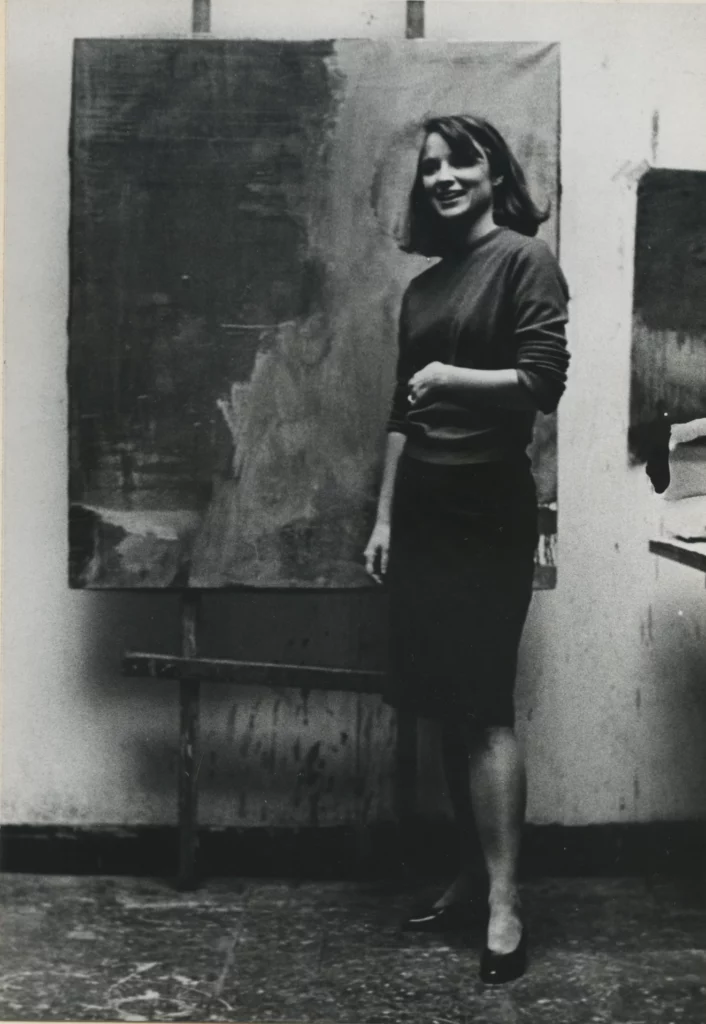
As a teenager, the young Mason would attend meetings at the Club with her mother, where she found inspiration in the Club’s cohort of women. Mason said, “I liked the freedom the women had in those days…the freedom to find their own style, their own voice.”
Mason had her first solo exhibition in 1960 at Area Gallery in New York City. In 1959, Mason joined Area Gallery on 10th Street, part of the artist-run cooperative movement known as the 10th Street galleries. Artists paid membership dues to run spaces, which in turn gave them the freedom to create their own opportunities and fostered community. This was especially important for providing opportunities for women artists during the era, who were often excluded from the rosters of commercial galleries.
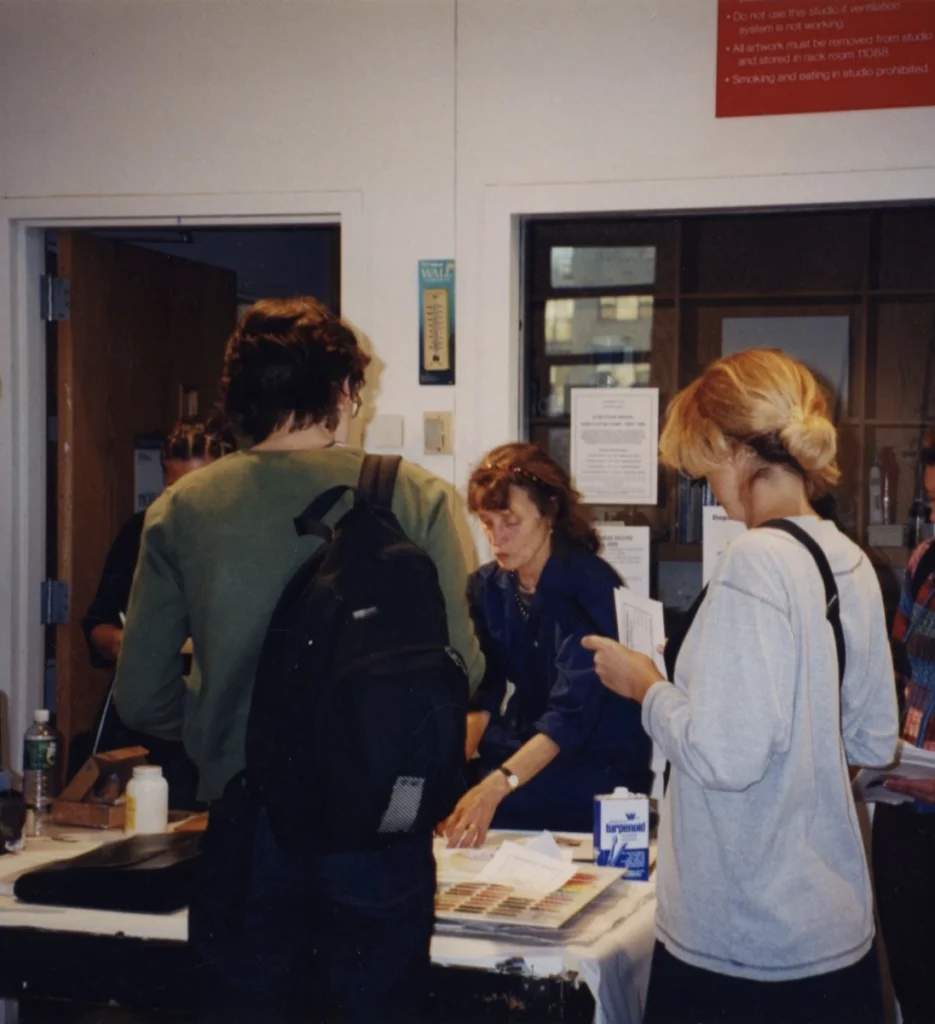
Mason began teaching night classes at CUNY Hunter in 1979. Mason’s instruction aligned with her intuitive studio practice: “eventually [students started drawing] with the non-dominant hand, and sometimes upside-down, and then you get the mind out of the way…I share the adventure with them or they share the adventure with me. I’m being twice taught, in some way.” The entrance of pedagogy into Mason’s life began a new chapter, one which prompted her advocacy for students. Each year, Mason sponsored a student to attend Vermont Studio Center as a resident. This decision was not contingent upon a student being particularly high-achieving or lauded. Rather, Mason chose individuals who displayed drive and promise, who just needed an extra hand to fully step into their artistry.
All images © 2026 Emily Mason | Alice Trumbull Mason Foundation/ARS.